
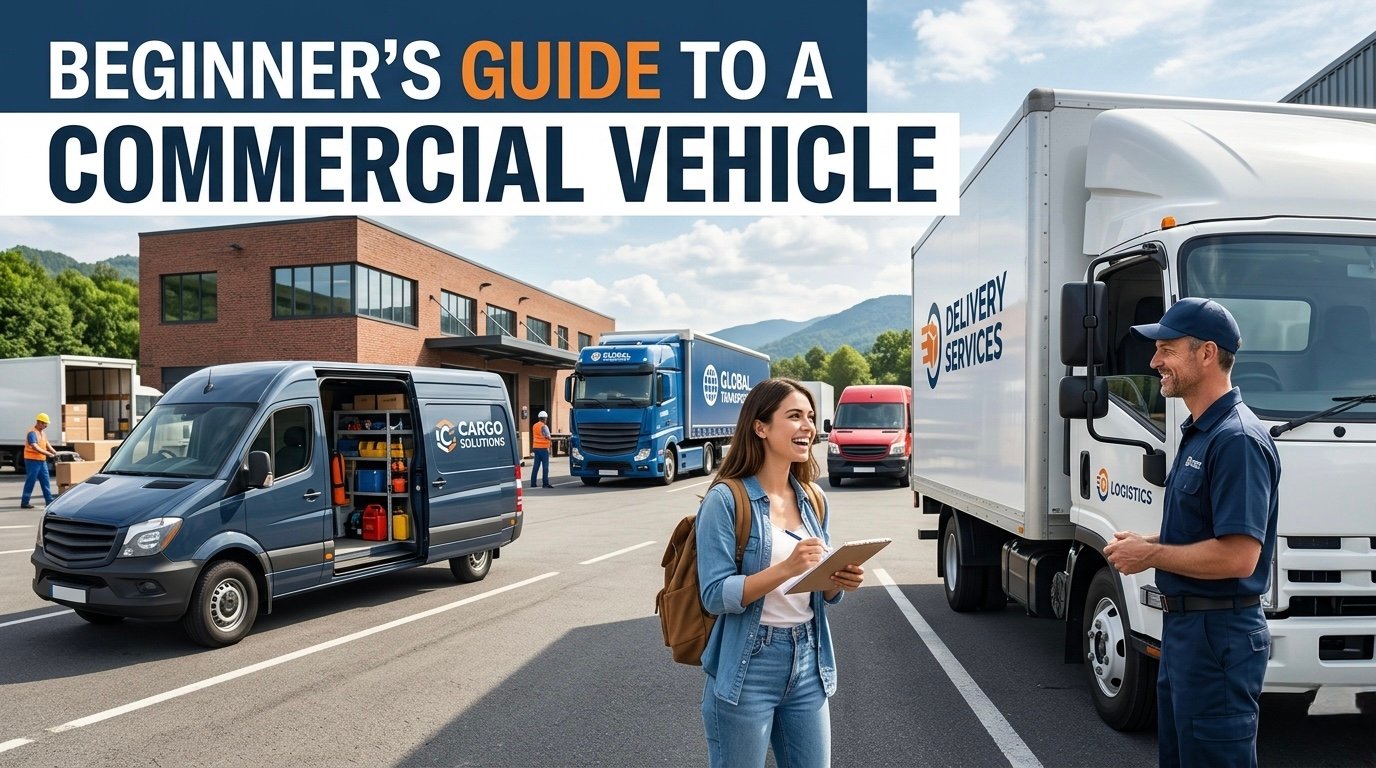
Quick Summary: A commercial motor vehicle (CMV) is any vehicle used for business that weighs 10,001 pounds or more, carries 9+ passengers for compensation, or transports hazardous materials. To legally operate a CMV, owners must obtain a federal EIN, a USDOT Number, Operating Authority (MC Number), commercial insurance, and register for state and federal programs like IRP, IFTA, and UCR.
How is a Commercial Motor Vehicle (CMV) Defined?
Federal and state regulations classify a vehicle as “commercial” based on weight, passenger capacity, and cargo. According to the Federal Motor Carrier Safety Administration (FMCSA), a vehicle operating in interstate commerce is a CMV if it meets any of the following criteria:
- Vehicle Weight: A Gross Vehicle Weight Rating (GVWR) or gross combination weight of 10,001 pounds or more.
- For-Hire Passenger Transport: Designed or used to transport more than 8 passengers (including the driver) for compensation.
- Private Passenger Transport: Designed or used to transport more than 15 passengers (including the driver), not for compensation.
- Hazardous Cargo: Used to transport hazardous materials in quantities requiring a safety placard.
Note on Vehicle Combinations: A standard heavy-duty pickup truck pulling a commercial trailer can easily exceed the 10,001-pound combination threshold, making the setup subject to federal commercial regulations.
What Paperwork is Needed to Operate a Commercial Vehicle?
Obtaining the proper legal paperwork requires coordinating with the IRS, the FMCSA, and state transportation departments. Follow these steps in order to ensure full compliance.
1. Establish a Legal Business Entity
Before applying for transportation permits, establish your business structure (such as an LLC or Corporation) at the state level. Then, apply for an Employer Identification Number (EIN) through the IRS. This tax ID is required for all federal commercial transportation applications.
2. Obtain a Commercial Driver’s License (CDL)
A CDL is legally required for the driver if the vehicle has a GVWR of 26,001 pounds or more, hauls hazardous materials, or carries 16 or more passengers. This process involves passing a DOT Medical Exam, securing a Commercial Learner’s Permit (CLP), completing Entry-Level Driver Training (ELDT), and passing a state skills test.
3. Apply for a USDOT Number
The USDOT Number is a unique identifier used by the FMCSA to track safety records, crash investigations, and compliance reviews. It is mandatory for vehicles over 10,000 lbs operating in interstate commerce. Applications are processed online via the FMCSA’s Unified Registration System (URS).
4. Secure Operating Authority (MC Number)
While a DOT number tracks safety, an MC Number (Motor Carrier Number) grants legal authority to transport federally regulated commodities owned by others for a fee across state lines. The application requires a $300 fee and includes a mandatory 21-day public vetting period.
5. Purchase Commercial Insurance
An MC Number cannot be activated until proof of insurance is filed with the FMCSA. Requirements include:
- Liability Insurance: Minimum coverage ranges from $750,000 to $5,000,000 depending on the cargo.
- Cargo Insurance: While not always federally mandated, it is required by most freight brokers to protect the goods in transit.
6. Register for IRP and IFTA
Vehicles weighing over 26,000 lbs or featuring three or more axles that cross state lines must register for two international agreements:
- International Registration Plan (IRP): Grants “apportioned” license plates, allowing the vehicle to operate in multiple jurisdictions while paying fees based on miles driven per state.
- International Fuel Tax Agreement (IFTA): Simplifies the quarterly reporting and payment of fuel taxes across different states.
7. File the Heavy Highway Vehicle Use Tax
If the commercial vehicle has a taxable gross weight of 55,000 pounds or more, the owner must file IRS Form 2290 to pay an annual federal tax. A stamped Schedule 1 from the IRS is required as proof of payment to obtain state license plates.
8. Pay the Unified Carrier Registration (UCR)
The UCR is an annual, state-administered fee based on the total number of commercial vehicles in your fleet. It must be paid before a commercial vehicle can legally cross state lines.
Essential Commercial Vehicle Terminology
| Term | Full Name | Definition |
| EIN | Employer Identification Number | A federal tax identification number issued by the IRS for businesses. |
| CDL | Commercial Driver’s License | A specialized driver’s license required to operate heavy or hazardous vehicles. |
| DOT# | Department of Transportation Number | A federal ID used to track a carrier’s safety and compliance records. |
| MC# | Motor Carrier Number | Operating authority that allows a company to haul goods across state lines for hire. |
| IRP | International Registration Plan | A program providing apportioned license plates for interstate commercial travel. |
| IFTA | International Fuel Tax Agreement | An agreement that simplifies fuel tax reporting for carriers operating across multiple states. |
| UCR | Unified Carrier Registration | An annual state fee required for carriers operating in interstate commerce. |

Contact
When you are ready to begin this journey, reach out to us at insights@ostreetdev.com. We can provide more guidance and align you with a vehicle that meets yours needs to help acheive your goals.
Leave a Reply